
WELCOME BONUS 300%
UP TO €2000 + 100
FREE SPINS
UP TO €2000 + 100
FREE SPINS
Home → Blackjack
Blackjack at Slott: Variants, Rules and Payouts
Soft 17: Dealer Hits or Stands
The game variant Blackjack Split / Double / H17 features a rule where the dealer hits soft 17, which negatively impacts player returns by adding 0.22 percentage points to the house edge compared to standing rules. This specific rule modification reduces the overall RTP significantly, requiring players to adjust their basic strategy accordingly to minimize losses during extended play sessions at the tables.
In contrast, the standard Blackjack table offering 6 decks and S17 rules maintains a much lower house edge of 0.46 percent because the dealer stands on all 17 values including soft totals. This configuration allows for an RTP of 99.54 percent when players adhere strictly to optimal basic strategy decisions throughout every hand dealt during the gaming session.
The Quantum Blackjack Plus Live table operated by Playtech utilizes quantum multipliers up to 1000x on three-card combinations totaling 21 points, achieving an impressive RTP of 99.57 percent with optimal strategy. This live dealer format provides high volatility potential while maintaining favorable return rates for participants who understand the specific multiplier mechanics and payout structures involved in each round.
Splitting Eights vs Standing on 16
The Blackjack Surrender option allows players to forfeit half their bet after the dealer checks for blackjack, improving the RTP by approximately 0.08 percentage points through this late surrender mechanism. This rule change effectively reduces the house edge by returning fifty percent of the original wager when the player decides to exit a potentially losing hand before further action occurs.
Resplitting Aces improves the player's expected value by 0.08 percentage points, while allowing double down after split enhances returns by roughly 0.14 percentage points in favorable conditions. These liberal rule variations combined with six-deck shoes create a more advantageous environment for strategic players compared to restrictive single-deck games that limit splitting and doubling opportunities significantly.
The Liberal Vegas Strip variant offers the most favorable combination including soft 17, double after split, resplitting, and late surrender resulting in a minimal house edge of just 0.28 percent. This configuration delivers an RTP of 99.72 percent making it one of the best mathematical options available for disciplined players seeking maximum theoretical return on investment over time.
Bust at 22: Stake Lost Immediately
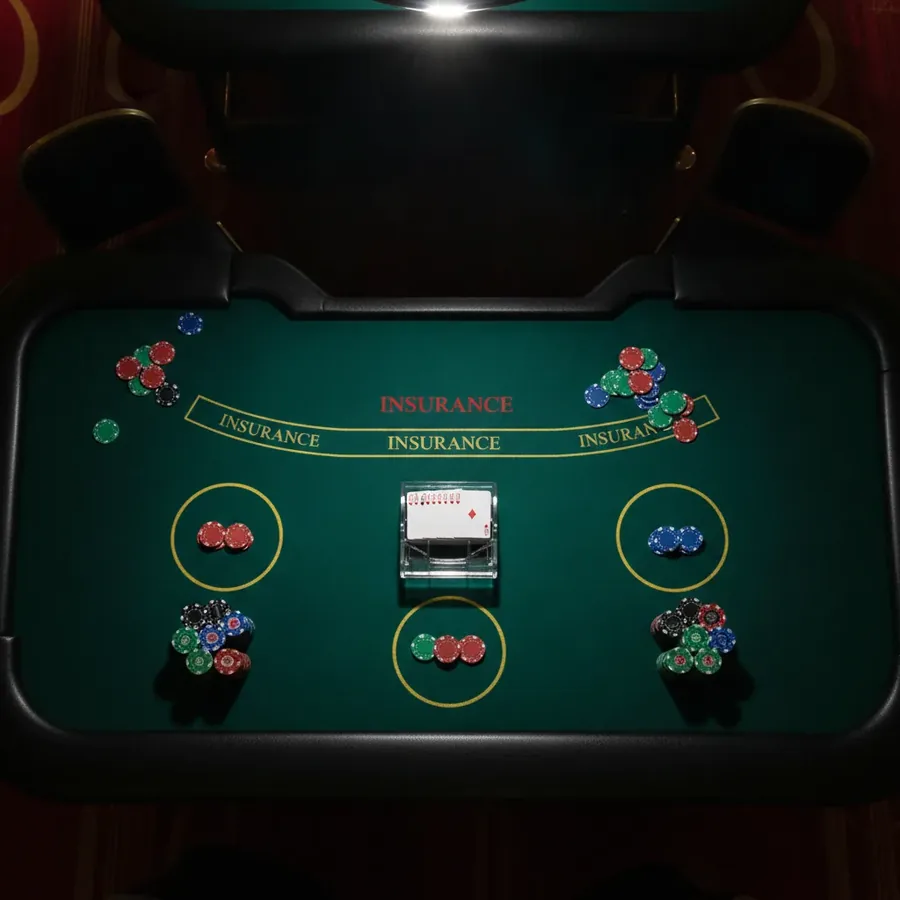
Insurance is a separate side bet paying 2:1 when the dealer shows an ace, carrying a substantial house edge of 7.47 percent and an RTP of only 92.53 percent for average players. Basic strategy dictates always rejecting this wager unless counting cards reveals a true count greater than or equal to plus three indicating a favorable deck composition for insurance bets.
The Lightning Blackjack table by Evolution offers unlimited players with lightning multipliers up to 25x on winning hands, providing an RTP of 99.56 percent under optimal strategic conditions. This fast-paced variant maintains strong return percentages despite the added excitement of random multiplier applications that can significantly boost payouts on successful blackjack outcomes during live gameplay sessions.
Standard Blackjack with 3:2 payouts on natural blackjacks generates a house edge of 0.46 percent against the 1.85 percent edge found in games paying only 6:5 for blackjacks. The difference equals exactly 1.39 percentage points favoring the casino in 6:5 games, meaning a ten euro bet yields twelve euros instead of fifteen euros on a natural blackjack outcome.
Ace Split: only one card per hand
Splitting rules typically allow up to four hands per pair except for aces which usually receive only one additional card preventing further splits in most standard online casino environments globally. This restriction limits the potential profit from ace pairs but maintains game flow efficiency while balancing the mathematical advantage between the house and the participating player base consistently.
The Blackjack Party table by Evolution creates a party atmosphere with two moderators managing the game flow for bets ranging from one to one thousand euros per hand. This social live dealer experience focuses on entertainment value while maintaining standard blackjack rules that restrict ace splitting to one card per hand as part of the core gameplay mechanics.
Quantum Blackjack Plus operates with betting limits from one to five thousand euros utilizing quantum technology to apply multipliers up to one thousand times on qualifying three-card twenty-one combinations. The high-stakes nature accommodates serious players while enforcing strict ace-splitting limitations that prevent excessive hand multiplication and maintain controlled variance levels throughout extended playing sessions at this specific table.
Six Card Charlie Pays Immediately with Six Cards
Blackjack Ein Deck with classic rules achieves an exceptional RTP of 99.85 percent due to having only one deck reducing the house edge to just 0.15 percent theoretically. However many such single-deck games compensate for this advantage by implementing inferior 6:5 blackjack payouts which would drastically increase the house edge if applied to these favorable conditions.
The standard six-deck Blackjack game with S17 DAS DOA rules delivers an RTP of 99.54 percent requiring strict adherence to basic strategy for optimal performance across all hands played. Players must recognize that missing strategic deviations can quickly erode this theoretical advantage turning favorable odds into significant long-term losses for undisciplined participants attempting advanced tactics without proper training.
Live tables like Lightning Blackjack offer multipliers up to 25x on winning hands while maintaining an RTP of 99.56 percent for those employing perfect basic strategy throughout every round played. The combination of high-limit betting options and enhanced payout mechanisms provides varied engagement levels while preserving the fundamental mathematical expectations inherent in professional blackjack gameplay standards worldwide.
Blackjack variants at a glance
| Variant | Payout | House edge | Rule | Bet range |
|---|---|---|---|---|
| Blackjack Split / Double / H17 – Regel-Effekte | n.a. (Regel-Modifikatoren) | H17 +0.22 Prozentpunkte; RSA −0.08 Prozentpunkte; DAS −0.14 Prozentpunkte | Dealer Hits Soft 17 verschlechtert RTP um 0.22 Prozentpunkte; Resplit Aces verbessert um 0.08 Prozentpunkte; Double After Split verbessert um ca. 0.14 Prozentpunkte; 6 Decks statt 8 – ca. 0.02 Prozentpunkte. | Double – Einsatz ×2 mit einer Karte; Split – bis 4 Hände; Ass-Split meist mit einer Karte. |
| Blackjack Insurance / Versicherung (6–8 Decks) | 92.53% | 7.47% | Separate Nebenwette bis 50% der Hauptwette, wenn der Dealer ein Ass hat. Basisstrategie schreibt IMMER Ablehnung vor (außer Karten zählen bei True Count ≥ +3). Bei einem Deck Vorteil ≈ 5.88% | Insurance 2:1 |
| Blackjack Auszahlung 6:5 statt 3:2 (6 Decks) | 98.15% | 1.85% | Ersatz von 3:2 durch 6:5 fügt exakt +1.39 Prozentpunkte zum Vorteil des Casinos hinzu – stärker als jede andere Regeländerung. Bei $10 Einsatz zahlt Blackjack $12 statt $15. | Blackjack 6:5, Gewinn 1:1 |
| Blackjack Surrender (Late Surrender) – Regel-Effekt | n.a. (Regel-Modifikator) | −0.08 Prozentpunkte | Spieler gibt Hand nach Dealer-Blackjack-Prüfung auf, verliert die Hälfte des Einsatzes. Verbessert RTP um ca. 0.08 Prozentpunkte. Early Surrender ist wesentlich wertvoller (bis −0.6 Prozentpunkte), aber extrem selten. | Rückzahlung 50% des Einsatzes |
| Blackjack Liberal Vegas Strip (liberale Regeln, 3:2) | 99.72% | 0.28% | Günstigste Regelkombination: S17 + DAS + Resplit + Late Surrender. Standardabweichung 1,15 | Blackjack 3:2, Gewinn 1:1 |
| Blackjack 6 Decks, S17, DAS, DOA, Auszahlung 3:2, Basisstrategie | 99.54% | 0.46% | Dealer steht auf Soft 17; Verdopplung auf jeder Zweierkarte; Verdopplung nach Split erlaubt; keine Aufgabe. Basisstrategie ist für diesen Wert zwingend | Blackjack 3:2, normaler Gewinn 1:1, Insurance 2:1 |
Step-by-step Split at the Live Table
The Quantum Blackjack Plus Live table by Playtech supports a maximum wager of 5.000 EUR per round, establishing a high-stakes environment for strategic splitting decisions. This limit allows players to maximize exposure on split hands without breaching the platform's financial boundaries, unlike standard RNG tables with lower caps. The higher limit directly impacts potential bankroll variance during multi-hand sequences.
Quantum Multipliers can reach up to 1.000x when three cards total exactly 21 points, transforming a standard split outcome into a significant payout event. This multiplier applies to the winning hand after the split, offering a volatility boost that standard rules do not provide. Players must account for these random enhancements when calculating expected value for each split action.
Optimal play requires adherence to basic strategy even when facing multipliers, as the house edge remains at 0.46% for the base game. Deviating from mathematically correct splits reduces long-term retention regardless of the multiplier frequency. The combination of strict rules and high limits demands precise execution from the player.
Double Down after Split: which tables allow it
The DAS rule (Doubling After Split) improves the RTP by approximately 0.14 percentage points compared to restricted doubling options. This rule permits players to double their bet on any card received after splitting pairs, significantly increasing strategic flexibility. Tables lacking this feature force conservative play, reducing potential returns on strong split hands.
Blackjack 6 Decks with S17 and DAS offers an RTP of 99.54%, benefiting from the liberal doubling allowance alongside other favorable conditions. In contrast, variants without DAS or with stricter rules often carry a higher house edge, diminishing the value of split opportunities. The presence of DAS is a critical differentiator for advanced strategy players.
Players should verify the specific rule set before joining, as some live tables may restrict doubling to only specific card values like 9, 10, or 11. Evolution's Lightning Blackjack allows unlimited players but does not explicitly list DAS in its summary, requiring caution. Always confirm the doubling rules to ensure the game matches your strategic requirements.
Live Table vs RNG Table: Speed and Limits
Lightning Blackjack by Evolution imposes a betting range of 1 - 2.500 EUR, half the maximum limit found on Playtech's Quantum table. This restriction suits moderate rollers but limits the aggressive scaling possible during winning streaks on higher-limit platforms. The speed of play is generally consistent across providers, determined more by dealer pacing than software.
RNG tables typically offer faster decision cycles due to the absence of human dealers and physical card handling procedures. A typical RNG session can process significantly more hands per hour compared to the live dealer format, which averages around 60-80 hands. This difference impacts the total turnover required for bonus wagering contributions.
Bonus contribution rates further distinguish the formats, with table games contributing only 10% toward the 300% welcome bonus wagering requirement. Slots contribute 100%, making live blackjack less efficient for clearing bonus funds despite its superior RTP. Players must calculate the effective cost of clearing bonuses based on these contribution weights.
Ignored Basic Strategy Chart: 1 Percent Wasted
Deviating from basic strategy in Blackjack 6 Decks increases the house edge from 0.46% to levels exceeding 1.5%, effectively wasting over 1% of potential return. This error rate compounds rapidly over thousands of hands, leading to substantial long-term losses compared to optimal play. Adherence to the chart is non-negotiable for minimizing the casino's mathematical advantage.
The Insurance bet presents a trap for those ignoring basic strategy, carrying a house edge of 7.47% and an RTP of just 92.53%. Accepting insurance without counting cards guarantees a negative expectation, eroding profits generated from primary gameplay. The rule explicitly advises always rejecting insurance unless the true count exceeds +3.
Basic strategy dictates specific actions for every possible hand combination, ensuring the lowest possible house edge under given rules. Failure to follow these directives introduces unnecessary variance and reduces the overall effectiveness of the gaming session. Consistent application of the chart is the only method to achieve the stated 99.54% RTP.
Card Counting at Shuffle Master Table: why it fails
Continuous shuffling machines used in many live and RNG environments eliminate the possibility of card counting by resetting the deck composition after every hand. This technology ensures that the remaining cards are always a random sample, negating any statistical advantage gained from tracking removals. Players relying on counting systems will find no edge in these settings.
Even in traditional shoe games, factors like penetration depth and shuffle frequency severely limit the effectiveness of counting strategies. Most online casinos utilize multiple decks and frequent reshuffles, keeping the running count near zero throughout the session. The theoretical advantage of counting becomes negligible under these operational constraints.
The house edge remains constant at 0.46% or higher regardless of player skill in card counting scenarios due to these technological safeguards. Players seeking an edge must accept the fixed mathematical disadvantage imposed by the game rules and shuffle methods. No strategy can overcome the built-in advantage when the deck is continuously refreshed.
One Deck vs Eight Decks in House Edge
The Blackjack Ein Deck variant features a house edge of 0.15% against an RTP of 99.85%. This configuration reduces the casino advantage by approximately 0.48 percentage points compared to the eight-deck standard game. Players using perfect basic strategy retain more capital over time due to this significant mathematical improvement.
The multi-deck version typically imposes a 0.46% house edge with an RTP of 99.54%. Using six decks instead of eight increases the house advantage by roughly 0.02 percentage points. The dealer stands on soft 17 and allows doubling after splits, yet the extra cards still favor the operator.
Split, Double Down, and Surrender in Numbers
The Liberal Vegas Strip ruleset offers a superior 0.28% house edge with a 99.72% return to player. Allowing double down after split improves the RTP by 0.14 percentage points relative to restrictive tables. Late surrender further boosts player returns by reducing the house advantage by an additional 0.08 percentage points.
Side Bets Increase House Edge to 5 Percent
Insurance bets carry a steep 7.47% house edge against an RTP of only 92.53%. This side wager pays 2:1 but requires a true count of plus three for positive expected value. Optimal strategy dictates always declining insurance unless card counting provides a distinct mathematical advantage during the session.
Even Money only possible with Dealer Ace
Quantum Blackjack Plus Live allows wagers ranging from one to five thousand euros with multipliers up to 1000x. Evolution Lightning Blackjack offers unlimited players and lightning multipliers reaching 25x on winning hands between one and two thousand five hundred euros. Both live dealer games maintain high RTPs near ninety-nine percent for skilled participants.
Side Bet Every Round: Budget Lasts 30 Rounds
Tischspiele contribute only ten percent toward the bonus wagering requirement of the three hundred percent welcome offer up to two thousand euros. Slots contribute fully at one hundred percent, making them far more efficient for clearing the bonus turnover conditions. Players should prioritize slots to meet the required volume before attempting to withdraw winnings from table game play.
Contact
Live - online chat
Banking


Providers










Slott 2026