
WELCOME BONUS 300%
UP TO €2000 + 100
FREE SPINS
UP TO €2000 + 100
FREE SPINS
Home → Roulette
Roulette at Slott
What Straight, Split, and Street Practically Mean
The Straight bet covers a single number on the European wheel with 37 sectors and offers a payout of 35:1. This specific wager maintains the standard house edge of 2.70 percent across all outside and inside bets. A player wagering ten euros receives three hundred fifty euros upon success, excluding the original stake. The American variant with 38 sectors applies the same payout ratio but increases the house advantage to 5.26 percent.
A Split wager places chips on the line between two adjacent numbers, resulting in an 17:1 payout ratio. This bet reduces the probability of winning compared to a straight number but keeps the RTP at 97.30 percent for European tables. The house edge remains constant at 2.70 percent regardless of the specific pair selected by the bettor. Players must ensure the chip placement is precise to avoid disputes during the live dealer spin sequence.
A Street bet spans three consecutive numbers in a horizontal row on the layout grid. This configuration yields an 11:1 payout while maintaining the 2.70 percent house edge found on European wheels. The strategy requires careful bankroll management because the risk per spin is higher than single number bets. Ultimate Roulette by Ezugi allows this type of wager with stakes ranging from 0.10 EUR up to 5,000 EUR.
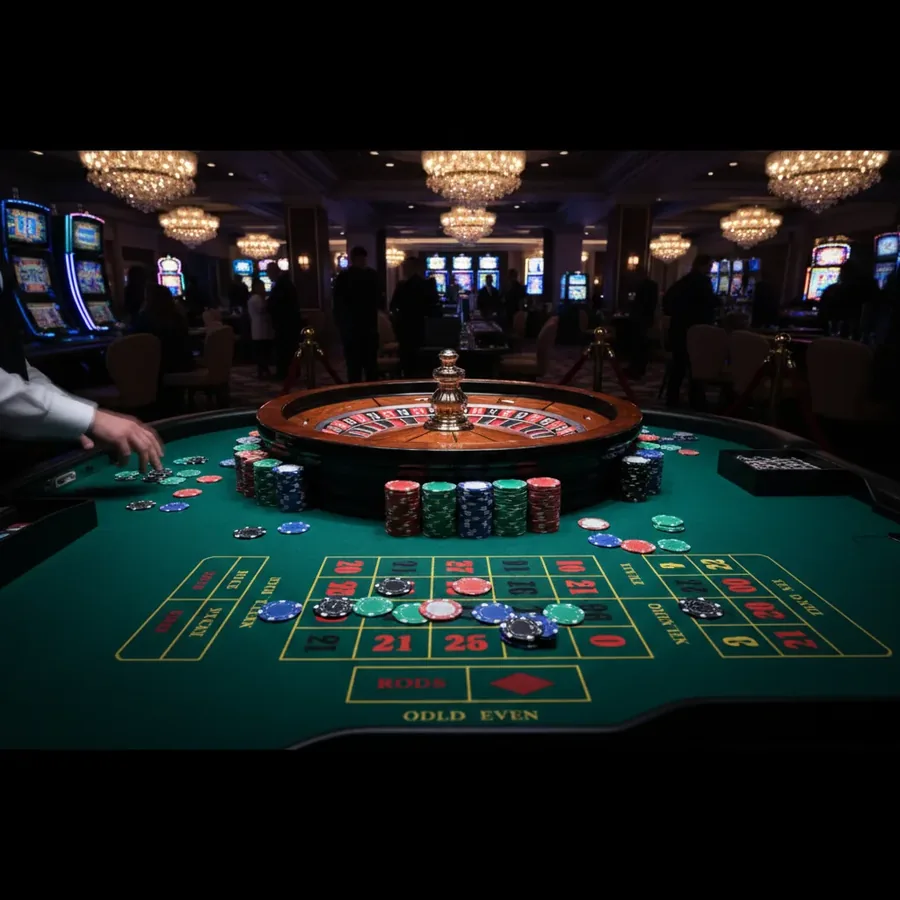
Too High a Bet for a 50 EUR Bankroll
Starting with a 50 EUR bankroll presents immediate challenges when facing the maximum table limits at Slott. Games like Blaze Roulette by Authentic Gaming allow bets up to 5,000 EUR, which far exceeds any reasonable micro-staking plan. Even minimum bets of 0.20 EUR deplete funds quickly if a losing streak occurs during high-variance sessions. Players must select lower-limit tables to extend playtime and manage volatility effectively within tight financial constraints.
The Five Number Bet on the American wheel covers 0, 00, 1, 2, and 3 with a payout of only 6:1. This specific wager carries a dangerous house edge of 7.89 percent, significantly worse than the standard 5.26 percent. Such unfavorable odds rapidly erode a small 50 EUR balance, making long-term survival statistically improbable. Avoiding this trap is essential for preserving capital when testing strategies with limited initial deposits.
European roulette offers a much safer environment with a house edge of just 2.70 percent on standard bets. A player betting one euro per spin can survive approximately thirty-seven spins on average before ruin. This duration provides sufficient data to observe variance without requiring a large initial investment. Managing stake size relative to the total bankroll ensures that temporary losses do not end the session prematurely.
Place Chip Until Rien ne va plus
The phrase Rien ne va plus signals that no further bets are accepted once the dealer closes the betting window. This critical moment typically occurs after the ball has been spun and is rolling on the wheel surface. Live dealers enforce this rule strictly to prevent late entries that could manipulate the outcome unfairly. Players must act decisively before the verbal announcement to ensure their wagers are registered on the digital layout.
Quantum Roulette Live by Playtech introduces multipliers up to 500x on random numbers before the spin concludes. These quantum modifiers apply to straight bets and can drastically increase payouts beyond the standard 35:1 ratio. The base RTP remains 97.30 percent, but the potential for huge wins depends entirely on hitting these boosted sectors. Understanding the timing of multiplier application is crucial for maximizing returns during volatile rounds.
Ultimate Roulette by Ezugi features multipliers reaching 1,000x with potential doubling effects up to 2,000x for covered numbers. These enhancements transform standard outcomes into massive windfalls for players who correctly predict the winning sector. The game supports stakes from 0.10 EUR to 5,000 EUR, accommodating both cautious and aggressive betting styles. Successful players often adjust their chip placement based on historical multiplier patterns observed during previous spins.
How Much Budget Withstands 2.70 Percent House Edge
The 2.70 percent house edge represents the theoretical loss rate over hundreds of thousands of spins on European wheels. For every one hundred euros wagered, the casino expects to retain two euros and seventy cents in the long run. This mathematical reality dictates that consistent winning is impossible without exploiting promotional bonuses or favorable rule variations. Players should view losses as the cost of entertainment rather than an investment opportunity.
French Roulette with La Partage reduces the effective house edge on even-money bets to just 1.35 percent. When zero appears, half of the red/black or odd/even wager is returned to the player immediately. This rule significantly improves the expected value for conservative strategies focusing on outside bets only. The RTP for these specific wagers rises to 98.65 percent, offering better retention rates for bankrolls.
Inner bets in French Roulette do not qualify for the La Partage rule and retain the standard 2.70 percent edge. Straight bets paying 35:1 and splits paying 17:1 follow the same mathematical structure as European variants. Players targeting high payouts must accept the higher variance associated with these interior wagers. Balancing inner and outer bets helps stabilize the overall budget against the inevitable statistical drift toward the house advantage.
Which Bets are Excluded from Bonus Wager?
Tischspiele contribute only 10 percent toward the bonus turnover requirement for the 300 percent welcome bonus up to 2,000 EUR. This low contribution rate makes clearing the wagering conditions through roulette significantly more difficult than playing slots. A player must wager twenty times the bonus amount in actual terms to meet the full requirement. Strategic allocation of funds between games is essential to manage the inflated turnover target effectively.
Live dealer tables such as Blaze Roulette and Quantum Roulette count toward this 10 percent contribution limit similarly. The 300 percent match up to 2,000 EUR plus 100 free spins requires substantial volume to unlock withdrawals. Since each euro spent on roulette only counts as ten cents toward the goal, the effective wagering multiplier becomes extremely high. Players should calculate the total turnover needed based on their chosen game mix before depositing.
Excluding high-contribution games forces players to rely heavily on lower-paying roulette variants to clear the bonus. The combination of a 10 percent table contribution and a 2.70 percent house edge creates a double barrier to profit. Realistic expectations are necessary because the mathematical disadvantage compounds with the slow progress toward meeting requirements. Careful tracking of wagering status prevents unexpected restrictions on withdrawing winnings earned during the promotion period.
Roulette bet types at a glance
| Bet | Payout | Win Chance | Numbers Covered | House Edge |
|---|---|---|---|---|
| Roulette Amerikanisch (doppelte Null, 38 Sektoren) | Straight 35:1, Split 17:1, Street 11:1, Corner 8:1, Six Line 5:1, Dozen 2:1, Column 2:1, Rot/Schwarz 1:1 | 94.74% | 38 Sektoren (1–36 + 0 + 00); Auszahlungen wie beim europäischen Rad, aber der zusätzliche Sektor verdoppelt den Hausvorteil | 5.26% |
| Roulette Amerikanisch – Five Number Bet (0, 00, 1, 2, 3) | Five Number 6:1 (deckt 5 von 38 Sektoren) | 92.11% | Einzige Wette am amerikanischen Rad mit Edge über 5,26% – „Fallenwette“. Kein Äquivalent am europäischen Rad | 7.89% |
| Roulette Französisch mit La Partage (gerade Chancen) | Rot/Schwarz 1:1 (bei 0 Rückerstattung 50%), Odd/Even 1:1, Low/High 1:1; Innere Einsätze ohne La Partage: Straight 35:1, Split 17:1, Street 11:1, Corner 8:1 | 98.65% | Bei 0 wird die Hälfte des Einsatzes auf gerade Chancen zurückerstattet (Rot/Schwarz, Pair/Impair, Manque/Passe). En Prison gibt denselben 1,35%. Regel gilt NUR für gleiche Einsätze | 1.35% |
| Roulette Europäisch (einfache Null, 37 Sektoren) | Straight 35:1, Split 17:1, Street 11:1, Corner 8:1, Six Line 5:1, Dozen 2:1, Column 2:1, Rot/Schwarz 1:1, Odd/Even 1:1, 1-18/19-36 1:1 | 97.30% | 37 Sektoren (1–36 + 0); Auszahlungen wie für 36 Sektoren – daher konstanter Edge auf ALLE Wetten | 2.70% |
| Roulette Französisch, innere Einsätze (La Partage gilt nicht) | Straight 35:1, Split 17:1, Street 11:1, Corner 8:1, Six Line 5:1, Dozen 2:1, Column 2:1 | 97.30% | Rad gleich (37 Sektoren), aber La Partage/En Prison gilt nicht für innere Einsätze – Edge bleibt europäisch | 2.70% |
European Wheel with 37 Pockets Explained
The European Roulette variant features a wheel with 37 pockets, including numbers one through thirty-six and a single zero. This configuration yields a house edge of 2.70%, which is significantly lower than the 5.26% found on wheels with double zeros. Players betting on standard options like Straight or Split receive payouts of 35:1 and 17:1 respectively, maintaining consistent odds across all wager types.
In contrast, the American Roulette version utilizes 38 sectors by adding an extra double-zero pocket to the layout. This additional sector effectively doubles the casino's advantage, raising the house edge from 2.70% to 5.26% for every bet placed on the table. The payout structure remains identical to the European model, meaning players face steeper long-term losses on the same winning combinations.
Wagering contribution for these table games counts toward bonus turnover at a rate of only 10%, restricting how quickly players can clear promotional funds. A 300% welcome bonus up to €2,000 requires substantial volume to satisfy conditions, making low-contribution games less efficient for conversion. This limitation applies equally to both European and American variants available in the lobby.
Live Table vs RNG Table: Rounds per Hour
Ultimate Roulette by Ezugi operates within a stake range of 0.10 to 5,000 EUR, offering multipliers up to 1,000x on selected numbers. This live dealer format introduces dynamic elements that differ from static Random Number Generator tables, which typically lack real-time host interaction. The RTP for this specific game sits at 97.30%, matching the standard European baseline despite the added multiplier features.
Blaze Roulette hosted by Authentic Gaming restricts play to European wheels with 37 sectors and maximum payouts capped at 35:1. Live hosts are present between 19:00 and 01:00 CEST, creating a scheduled availability window that RNG software does not require. Stake limits here start slightly higher at 0.20 EUR, catering to players seeking a more traditional table atmosphere without volatile side bets.
Quantum Roulette Live by Playtech integrates quantum multipliers up to 500x on one to five numbers, altering the variance profile significantly. While the base RTP remains 97.30%, the introduction of random high-value multipliers creates spikes in potential returns unavailable in standard digital versions. All three live variants maintain the same maximum stake of 5,000 EUR, allowing high rollers to test strategies under identical financial constraints.
When is it Worth Switching to French Roulette?
French Roulette with La Partage offers an RTP of 98.65% and a house edge of just 1.35% on even-money bets like Red/Black. This rule refunds half the stake when the ball lands on zero, effectively halving the casino advantage compared to standard European rules. Players seeking optimal mathematical value will find this variant superior for long-term bankroll preservation on outside wagers.
The En Prison rule provides an alternative mechanism for the same 1.35% house edge, keeping the original stake on the table for the next spin instead of returning half immediately. Both La Partage and En Prison apply exclusively to even-money bets, leaving inner wagers unaffected by these favorable modifications. Consequently, Straight bets still carry the standard 2.70% edge, paying out at 35:1 regardless of the French designation.
Inner bets such as Split, Street, and Corner retain their standard payouts of 17:1, 11:1, and 8:1 without any reduction in house advantage. The 2.70% edge persists for these wagers because the special refund rules do not extend beyond simple chances like Odd/Even or Low/High. Switching to French rules only benefits players who primarily utilize outside betting markets rather than complex inside combinations.
Why the Ball Has No Memory
Each spin on the American Roulette wheel involves 38 independent sectors, ensuring previous outcomes have no influence on future results. The Five Number Bet covers 0, 00, 1, 2, and 3, presenting a unique trap with a house edge of 7.89% and an RTP of 92.11%. This wager stands as the only option on the American wheel where the disadvantage exceeds the standard 5.26% threshold found elsewhere.
No equivalent exists for the Five Number Bet on European or French wheels, which contain only 37 sectors and lack the double-zero pocket. Avoiding this specific combination prevents exposure to the highest volatility and poorest return rates available in the roulette portfolio. Players adhering to strict bankroll management should exclude this bet entirely to maintain expected values closer to the theoretical average.
Standard straight bets pay 35:1 on both wheel types, but the probability of hitting the number differs due to the varying total sectors. The American wheel reduces win frequency by approximately 2.6% compared to the European version, directly impacting long-term profitability. Understanding these mechanical differences helps players avoid statistically inferior wagers while focusing on games with transparent and predictable odds.
When Does the Lock for Risk Bets Apply?
Roulette games contribute only 10% toward fulfilling the wagering requirements attached to the 300% welcome bonus up to €2,000. This low contribution rate effectively locks high-risk betting strategies from efficiently clearing the bonus funds within standard timeframes. Players must generate ten times the nominal wager amount to achieve the same progress as slot contributions, drastically extending the clearance period.
Live dealer variants like Ultimate Roulette and Blaze Roulette fall under this same restrictive contribution category, limiting aggressive staking tactics. The maximum stake of 5,000 EUR allows for significant individual bets, but the 10% weighting means each euro wagered only counts as ten cents toward the target. This structure discourages rapid bonus conversion through high-volume table play compared to faster-contributing categories.
Inner bets in French Roulette maintain the standard 2.70% house edge, further complicating efforts to meet turnover targets with minimal loss. Combining high-edge wagers with low contribution percentages creates a double penalty for players attempting to maximize bonus utility. Strategic alignment requires selecting games where contribution rates align with the player's preferred betting style and risk tolerance.
How Long is a Betting Phase at a Live Table?
The betting phase duration varies across the three live roulette titles, ranging from brief intervals in high-speed games to longer windows in standard tables. Ultimate Roulette by Ezugi and Quantum Roulette Live by Playtech both operate within a 0.10 EUR to 5,000 EUR stake range, where the rapid-fire nature of quantum multipliers necessitates shorter decision times compared to Blaze Roulette by Authentic Gaming. This structural difference impacts player strategy, as the faster pace of the former two requires quicker placement of bets on the 37 sectors before the dealer locks the wheel.
Blaze Roulette enforces a specific operational window with a live host active from 19:00 to 01:00 CEST, providing a more traditional pacing that allows for deliberate analysis of the European 37-sector wheel. The maximum payout cap remains consistent at 35:1 for straight bets across all three providers, ensuring that the extended betting time in Blaze does not alter the fundamental risk-reward ratio of the game. Players must account for this schedule limitation when planning sessions, as availability is strictly confined to the evening hours in Central European Summer Time.
The house edge of 2.70 percent applies uniformly to all three live tables, meaning the speed of the betting phase does not influence the long-term mathematical expectation of the wagers placed. While multipliers up to 500x in Quantum Roulette offer dramatic short-term variance, the underlying RTP of 97.30 percent remains identical to the standard European rulesets found in the other titles. Consequently, the duration of the bet window serves primarily as a mechanic for engagement rather than a factor that shifts the statistical advantage away from the casino.
What Doesn't Count: Red and Black Simultaneously
Placing simultaneous bets on Red and Black creates a scenario where the expected value drops significantly due to the presence of the zero sector on the European and French wheels. With an RTP of 97.30 percent and a house edge of 2.70 percent, covering both even-money outcomes leaves the single zero as the only losing condition, effectively guaranteeing a loss over time proportional to the total stake placed on both sides. This strategy fails to mitigate risk because the payouts for Red or Black are fixed at 1:1, which cannot offset the inevitable hit on the green pocket.
In contrast, the American Roulette variant features a double zero, expanding the wheel to 38 sectors and increasing the house edge to 5.26 percent, which makes simultaneous Red/Black betting even less viable financially. The additional 00 sector doubles the probability of losing compared to the European wheel, while the payout structure remains unchanged at 1:1 for these outside bets. This mathematical reality highlights why such coverage is often discouraged by analysts who prioritize bankroll preservation through single-outcome strategies.
The Five Number Bet on the American wheel, covering 0, 00, 1, 2, and 3, presents a unique exception with a house edge of 7.89 percent and an RTP of 92.11 percent, making it the worst wager available. Although this bet covers five sectors for a 6:1 payout, its steep disadvantage far exceeds the cost of simply betting on Red or Black separately on a European wheel. Understanding these distinct edges helps players avoid common pitfalls where perceived safety leads to statistically inferior returns.
How Long a Session May Last
The length of a gaming session is directly constrained by the bonus turnover requirements, which mandate a significant volume of play to unlock withdrawal privileges. A 300 percent welcome bonus up to €2,000 requires substantial wagering activity, with table games contributing only 10 percent toward the total turnover obligation. This low contribution rate means that roulette bets generate progress slowly compared to slot games, forcing players to place a much higher aggregate stake to satisfy the conditions attached to the free spins and bonus funds.
With a house edge of 2.70 percent on European Roulette, each €100 wagered theoretically reduces the bankroll by €2.70, creating a steady drain that limits session longevity without strategic variance. If a player utilizes the maximum €2,000 bonus, the required turnover becomes immense given the 10 percent contribution rule, potentially extending the necessary playtime over many hours or days. The mathematical certainty of the edge ensures that prolonged sessions inevitably lead to depletion unless luck provides a temporary positive deviation from the mean.
Live tables like Ultimate Roulette and Quantum Roulette offer high volatility through multipliers up to 1,000x, which can drastically shorten or extend a session depending on early outcomes. These features introduce significant variance that disrupts the linear erosion predicted by the 2.70 percent house edge, allowing for sudden large wins or rapid losses. Players must manage their bankroll carefully to withstand these swings, as the potential for quick exits contrasts sharply with the slow grind required to clear the wagering requirements.
Which Tables are Blocked with Active Bonus
Table games contribute only 10 percent to the wagering requirements of the 300 percent welcome bonus, which effectively restricts the utility of roulette variants during the active bonus period. Since slots typically contribute 100 percent, playing roulette slows down the clearance process significantly, making it a less efficient choice for meeting the turnover conditions. This partial exclusion encourages players to focus on higher-contribution games if their primary goal is to unlock withdrawable cash quickly.
The specific restriction applies to all roulette types offered, including the live dealer versions from Ezugi, Authentic Gaming, and Playtech, regardless of their RTP or feature sets. Whether engaging with the 97.30 percent RTP European wheel or the lower-return American variant, every bet placed counts equally minimally toward the bonus release. This uniform treatment simplifies the terms but penalizes players who prefer the immersive experience of live croupiers over digital slots.
Understanding this limitation is crucial for managing expectations, as the 10 percent contribution rate means that a €100 bet on roulette only counts as €10 toward the turnover target. For a maximum bonus of €2,000, the implied turnover obligation becomes substantially larger than the bonus amount itself, requiring careful calculation of total stakes needed. Players should verify if any specific table games are entirely excluded, though the data indicates a universal partial contribution for the roulette category.
House Edge: What 2.70 Percent Actually Costs
The 2.70 percent house edge on European Roulette translates to a theoretical loss of €2.70 for every €100 wagered over an infinite number of spins. This figure is derived from the single zero on the 37-sector wheel, where the payout of 35:1 for a straight bet falls short of the true odds of 36:1. The discrepancy between the actual probability and the paid odds establishes the casino's mathematical advantage, ensuring long-term profitability for the operator.
Comparing this to the American Roulette variant reveals a stark contrast, where the double zero expands the wheel to 38 sectors and increases the house edge to 5.26 percent. This nearly doubling of the edge means that for the same €100 wagered, the expected loss rises to €5.26, making the American version significantly more expensive for the player. The identical payout structure of 35:1 for straight bets exacerbates this disadvantage, as the additional losing sector dilutes the return rate further.
French Roulette with La Partage offers a superior option by reducing the house edge on even-money bets to 1.35 percent, half that of the standard European wheel. When the ball lands on zero, the player retains 50 percent of their stake on Red/Black or Odd/Even wagers, effectively halving the cost of the zero pocket. This rule adjustment demonstrates how minor variations in game mechanics can substantially impact the financial burden on the player, provided they select tables that explicitly support this favorable condition.
Contact
Live - online chat
Banking


Providers










Slott 2026